
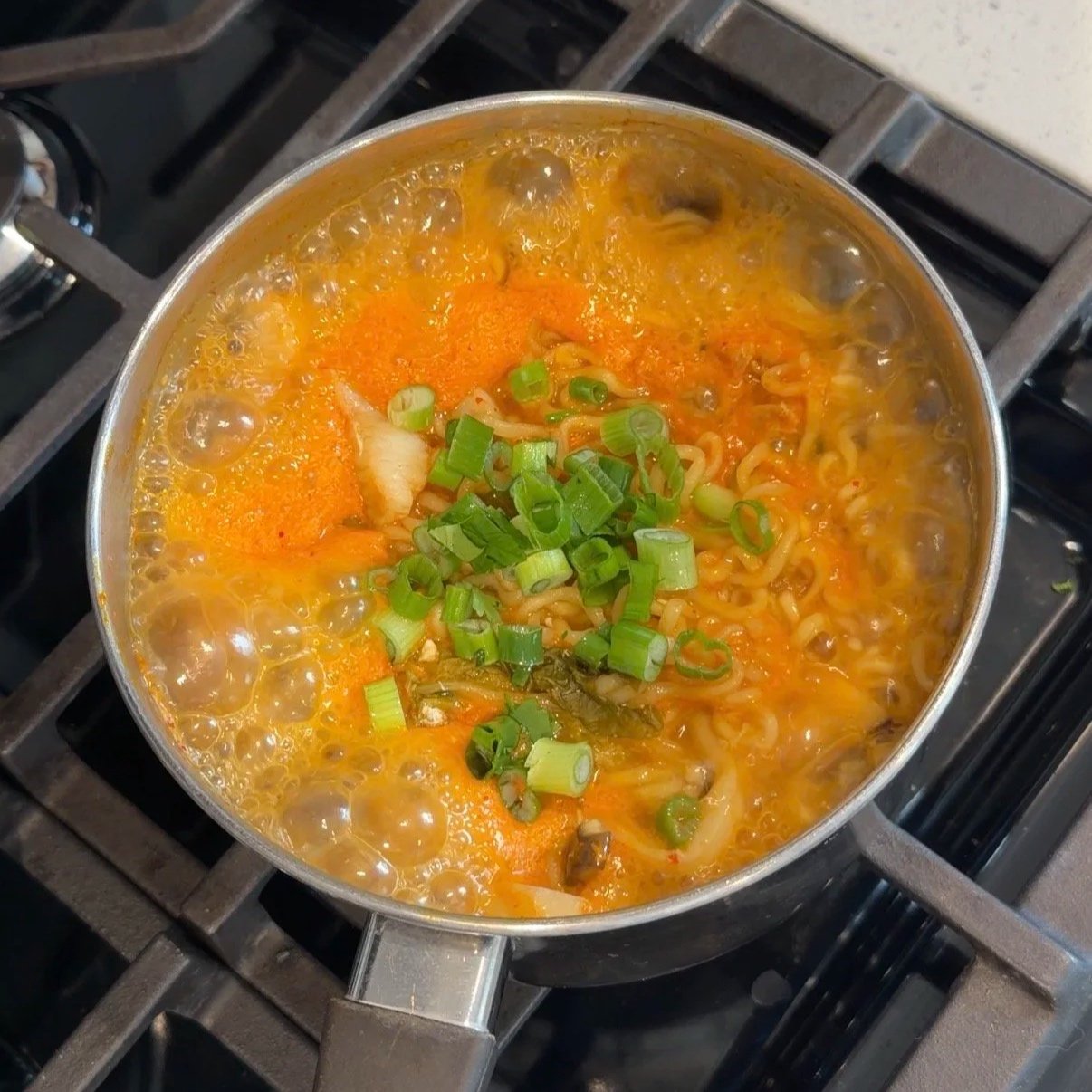
Boiling pot of Shin Ramyun ready to be slurped
Instant Ramen
Instant ramens are generally not considered healthy because of how most noodles are fried, the insanely high amount of sodium, additives and preservatives. I would not recommend eating instant ramen everyday but once in a while is generally fine for most people. If you have specific health conditions that would limit your sodium intake, additives, gluten or wheat, then I’d stay away from instant ramen. Of course, there are many gluten free options these days made with rice noodles and so on. I even found a healthier Shin ramen called light! It’s got 340 calories vs 510 calories from the original version. The noodles are air fried compared to being deep fried in the original version.
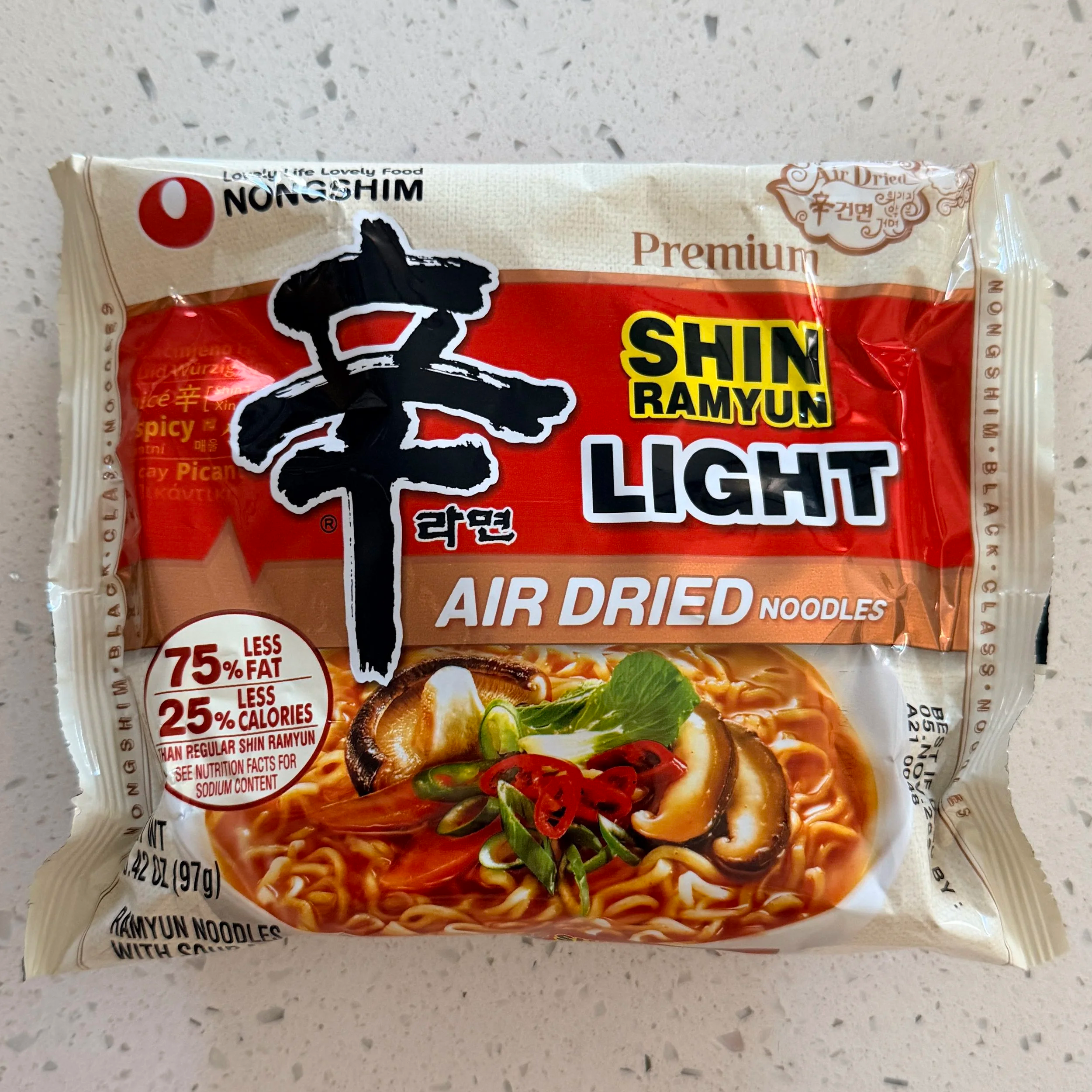
A packet of Shin Ramyun Light
Sodium
How much sodium is too much for us? For the general population without kidney, heart, liver or other fluid sensitive conditions, 2,300mg of sodium intake a day is the upper limit.
Let’s put that to perspective. 2,300mg = 1 teaspoon of salt
I’m sure most of us have seen our mothers or grandmothers cook with more than 1 teaspoon of salt in one dish sometimes. It is not surprising to practitioners to find that the general population consume 3,500mg or more a day. I have worked with clients who consume over 7,000mg of sodium.
A packet of regular Shin Ramen/Ramyun gives 1,970mg of sodium, not counting the sodium coming from vegetables and protein you’ll be adding to it. The light version gives 1,800mg of sodium — not a whole lot less than the original.Keep in mind, this is just ONE meal. We have to account for total sodium intake through the other meals and snacks that you may be having the rest of the day.
Check out my recommendation through the video or under “Dietitian Note” below.
Ingredients
Serves 11 packet of Shin ramyun (original)
2-3 bok choys (cut vertically, see video at 10th sec)
1 cup cut mushrooms (enoki, shiitake and oyster used in the video)
¼ cup swai fish filets (a handful)
¼ cup kimchi
1 egg
1 stalk of green onion, chopped
Instructions
1. Boil water
Bring a pot of water to a boil then add veggie flake packet and noodles.
2. Prep bok choy
Slice the bok choy vertically and cross sectionally. You can honestly cut them however you like. I prefer this way of cutting bok choy because you get to chew on every part of the bok choy for different textures. Set aside.
3. Prep mushrooms
Cut any large mushrooms like shiitake or oyster mushrooms however you like then add into the pot.
4. Swai fish
I had sliced swai fish filets available in my refrigerator so I decided to use them. You can use tilapia, canned tuna, shrimp, clams, or any seafood you have.
5. Kimchi
Add ¼ cup kimchi into the pot and let boil.
6. Egg and Bok Choy
Crack an egg right into the pot. I like them poached so I can taste the yolk semi or fully cooked. You could also stir the content in the pot to make the eggs a little scrambled like an egg drop soup style. Add your bok choy now and let simmer for a couple minutes.
7. Green onions
Chop some green onions and top it off right before serving. Enjoy!
Dietitian Notes
Each serving: 600-650cal | 90g carbs | 30g protein | 20g fat | 2,000-2,400mg sodium
Eating a bowl of ramen like this is an indulgence. Let’s be real. It is a full meal with good amount of carbs, protein, fat and obviously, sodium.
My recommendation is that once or twice a month would not hurt for the general healthy population. Again, if you have any medical conditions that may require a limited sodium intake, instant ramen is generally not recommended. Every person is unique and should be evaluated with recommendations unique to them.
Personal note: I do many hot workout classes that are 90-105’F and a humidity level of 60-70%. I sweat a lot during these classes and need electrolytes during the class or I would likely pass out. My general diet is also very healthy with limited use of salt despite being overall healthy. This allows me to indulge in some of these processed foods, outside foods or junk food sometimes without guilt.
Tips & Variations
You may add other types of vegetables or proteins to change up the flavor but still tasty:
Napa cabbage
cabbage
carrots
leek
broccoli
zucchini slices
other types of mushrooms like lion’s mane, button mushrooms, etc.
other seafood
tofu (silken/soft/firm/extra firm)
chicken (is alright flavor wise, not my personal choice but a good protein source)
pork loin
filet mignon or other lean cuts of beef
