
A refreshing high-protein buckwheat noodle salad that's perfect for lunch, dinner, or warm summer days.
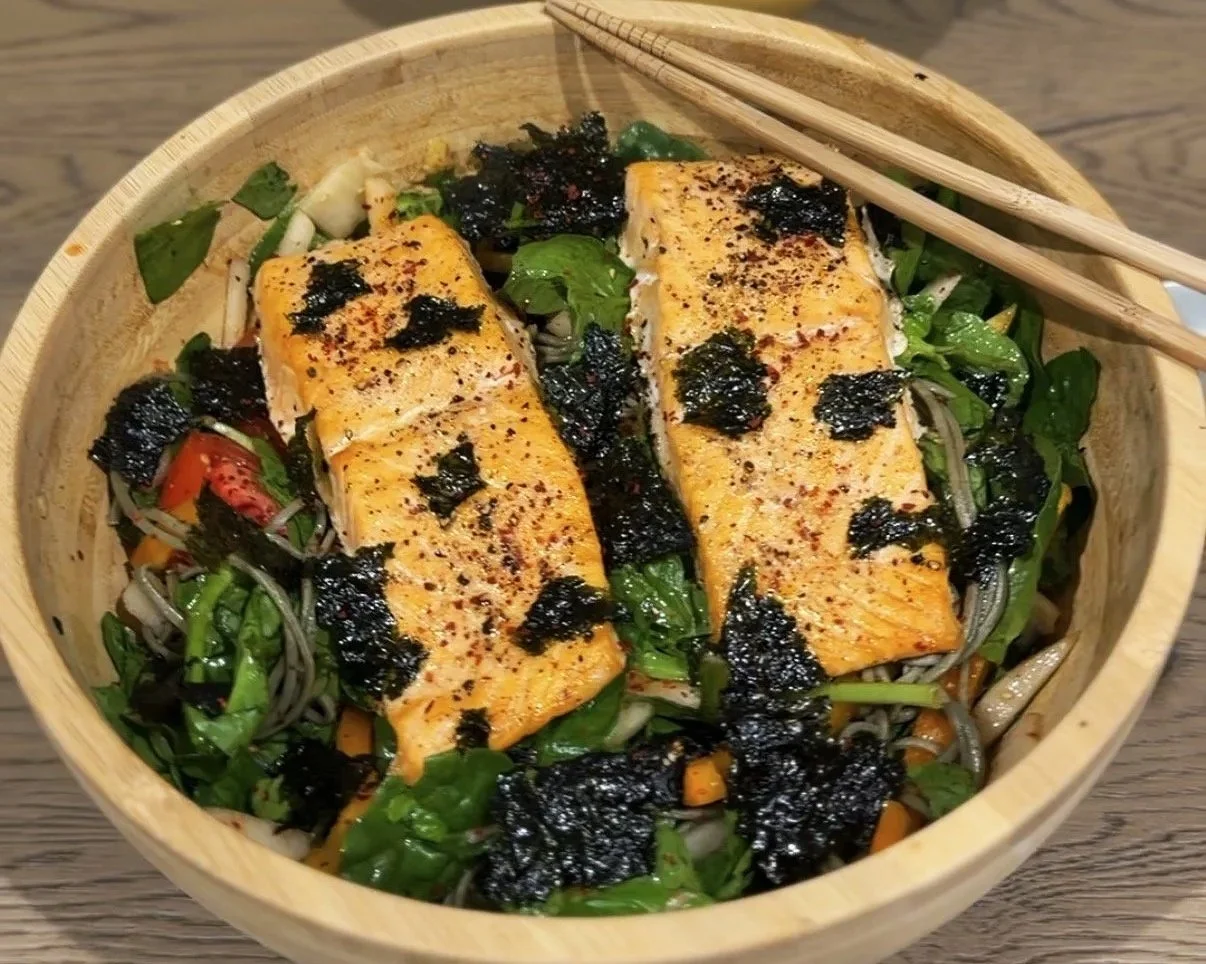
Nothing tastes more refreshing than cold soba noodles tossed with crisp vegetables, kimchi, and flaky baked salmon. This Korean-inspired salad is packed with protein, fiber, healthy fats, and vibrant flavors, making it an easy meal that's both satisfying and nourishing.
Whether you're looking for a quick weeknight dinner, meal prep idea, or a healthy recipe for hot weather, this cold soba salad comes together in under 30 minutes.
Why You'll Love This Recipe
Ready in about 25 minutes
High in protein (30–40g per serving)
Rich in fiber and heart-healthy fats
Naturally dairy-free
Easy to customize with your favorite vegetables
Great for meal prep
Refreshing and satisfying without feeling heavy
The Inspiration Behind This Recipe
This recipe was inspired by my Korean mother-in-law.
She follows a vegetarian diet and loves making simple meals using whatever vegetables happen to be in the refrigerator. One afternoon she boiled soba noodles, tossed them with fresh vegetables, kimchi, lemon juice, soy sauce, sesame oil, and sesame seeds, then served them with boiled eggs.
The recipe was incredibly simple—but surprisingly delicious.
I've since recreated her version with a few of my own additions, including baked salmon for extra protein and omega-3 fats, while keeping the fresh, light flavors that made me fall in love with the dish.
What Are Soba Noodles?
Soba means buckwheat in Japanese. In Korean, buckwheat noodles are called memil-guksu (메밀국수).
Traditional soba noodles are made from buckwheat flour, giving them a slightly nutty flavor and a pleasant chewy texture. They can be enjoyed hot in soups or chilled in refreshing noodle salads like this one.
Buckwheat is naturally rich in fiber, plant protein, magnesium, manganese, and antioxidants, making soba noodles a nutritious alternative to regular pasta.
Are Soba Noodles Gluten-Free?
Not always.
Many brands labeled "soba" contain a mixture of:
Wheat flour
Rice flour
Corn starch
Tapioca starch
Buckwheat flour
If you have celiac disease or need to avoid gluten, be sure to choose noodles labeled 100% buckwheat. Always read the ingredient list carefully, as "soba" does not automatically mean gluten-free.
Here are a couple 100% buckwheat/soba noodles you can find at the store:
100% buckwheat noodles from Target
Kajino Jyuwari Soba from Weee! — Weee! is one of my favorite online Asian grocery store. Use my referral link to get $20 off your next 2 orders, and I will get $20 off mine as well!
Japanese Soba vs. Korean Memil-Guksu
Although both are made with buckwheat, they have subtle differences.
Japanese soba noodles
Smooth and silky
Slightly delicate texture
Mild nutty flavor
Korean memil-guksu
Slightly heartier and more rustic
Chewier texture
Commonly paired with spicy sauces or kimchi
Both are delicious and work beautifully in this recipe.
Ingredients
Makes 2-3 servingssoba noodles 2 dime size amount (when grabbing with your thumb and second finger as measurement)
½ bell pepper, sliced
¼ - ½ Korean pear (optional), sliced to match sticks
1 tomato, cut to wedges
½ lemon
4 cups salad greens like spinach, kale, and/or lettuces
½ packet of stackable seaweed (I use the ones from Costco)
¼ cup kimchi, chopped
2 salmon filets
½ tsp salt
½ tsp black pepper
1 Tbsp olive oil
1 tsp sesame oil
3-4 Tbsp ponzu sauce
1-2 Tbsp toasted white sesame seeds
Instructions
1. Boil and chill soba
Bring a pot of water to boil. Add soba noodles and cook for 4-6 minutes or as stated per your packaging instructions. Prepare a large bowl of ice bath with a straining bowl over. See video for reference. When soba is done cooking, drain soba in the straining bowl. Rinse with cold tap water for 20 seconds or submerge the soba in the ice bath. Let sit until ready for use.
2. Bake salmon
Lay both filets on a baking sheet. Season with salt, pepper and drizzle olive oil on both sides. Then bake in air fryer at 390’F for 9 minutes or in the oven at 400’F for 10 minutes. When done, set aside.
3. Prepare vegetables
Cut up all your favorite salad vegetables and fruit, and add to a large salad bowl. Squeeze the lemon juice and pour over the vegetables in the salad bowl. Shred seaweed into the bowl.
4. Mix noodles
Add soba noodles to the bowl of vegetables, along with ponzu sauce, sesame oil and sesame seeds. Mix well!
5. Serve and enjoy!
Top with baked salmon and start slurping!
Dietitian Notes
Each serving: 550-600 cal | 45 g carb | 30-40 g protein | 30 g fat
Nutritional values will vary depending on the size of your salmon fillets and the brand of soba noodles used.
Buckwheat noodles are an excellent source of complex carbohydrates and provide approximately 6 grams of protein and 2–3 grams of fiber per cooked cup, making them a more nutrient-dense option than many refined pasta varieties.
Pairing buckwheat noodles with salmon creates a balanced meal rich in high-quality protein, omega-3 fatty acids, fiber, vitamins, and minerals that support muscle health, heart health, and healthy aging.
Tips & Variations
Add More Protein
Try replacing the salmon with:
Hard-boiled eggs
Air-fried tofu
Grilled chicken
Grilled steak
Shrimp
Baked cod
Sea bass
Tuna
Add More Vegetables
Mix in:
Cucumber
Carrots
Radishes
Edamame
Avocado
Purple cabbage
Green onions
Make It Spicy
Add:
Gochujang
Sriracha
Chili crisp
Extra kimchi
Meal Prep Tip
Store the noodles, vegetables, dressing, and salmon separately in the refrigerator for up to 3 days. Toss everything together just before serving to keep the vegetables crisp and the noodles from becoming soggy.
Frequently Asked Questions
Can I make this recipe vegetarian?
Yes! Simply replace the salmon with baked tofu, tempeh, or a couple of boiled eggs.
Can I eat soba noodles cold?
Absolutely. Cold soba noodles are commonly served in both Japanese and Korean cuisine and are especially refreshing during warmer months. Personally, I prefer soba cold than warm.
Is this recipe good for menopause?
Yes. This meal provides a combination of lean protein, fiber-rich carbohydrates, healthy fats, and colorful vegetables that can help support muscle maintenance, satiety, blood sugar balance, and overall health during perimenopause and menopause.
