
Aren’t we all looking for high calcium foods in midlife? Other than dosing on calcium supplements, let’s try a more natural, whole food way of getting calcium.
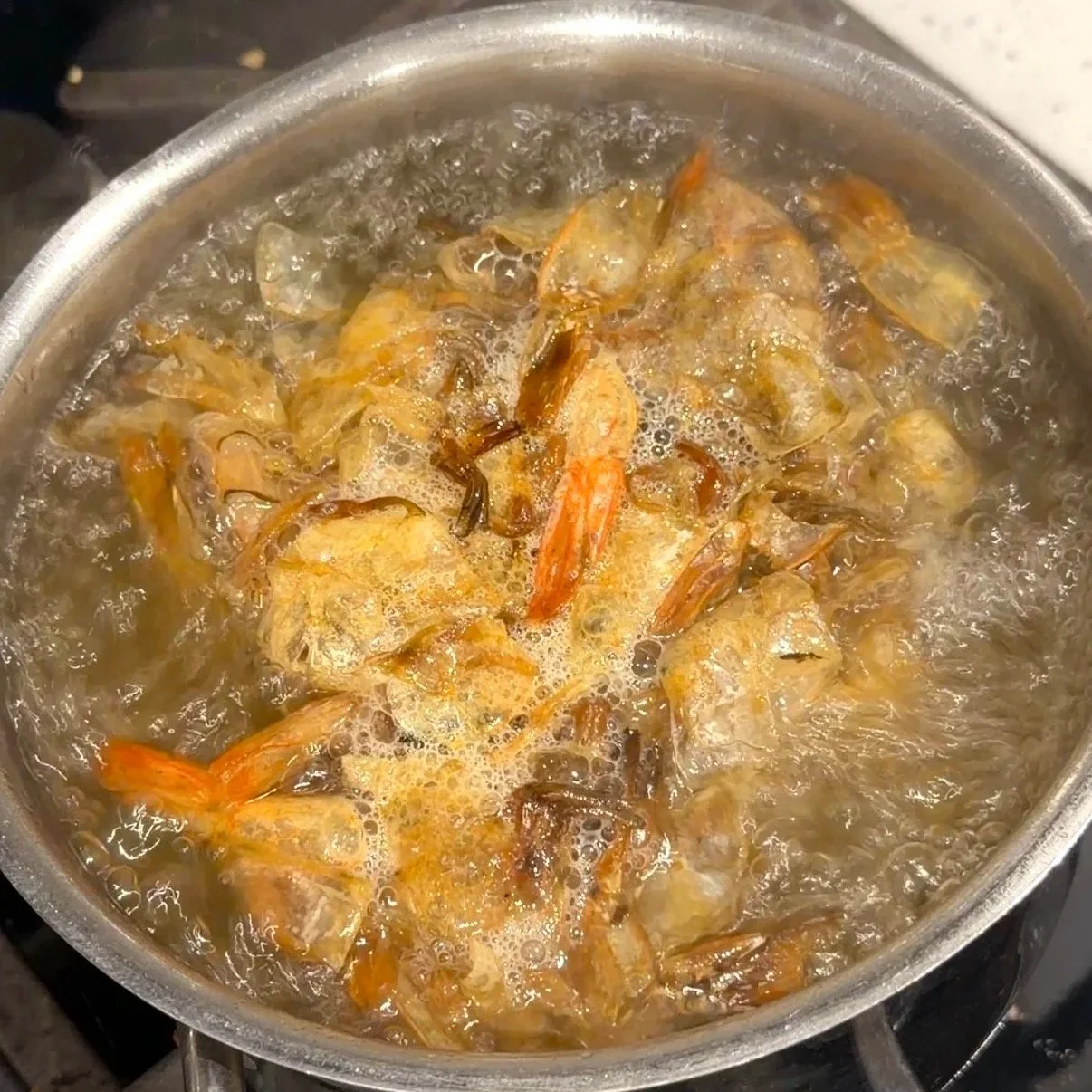
Boiling shrimp shells for broth
Calcium
Women going through perimenopause should intake 1,000 mg of calcium a day. If you are post menopausal or over 50, you should start hiking up your calcium intake to 1,200 mg daily.
Why do we need more calcium after menopause?
Declining estrogen accelerates bone loss because estrogen plays a HUGE role in bone remodeling — meaning the rebuilding of bones.(1) Studies report up to 5% bone density drop every year the first 5 years post menopause.(2) That’s up to 25% of bone loss! All it takes is one fall for us to get a hip fracture. I’ll leave the rest up to your imagination.
Food source
Dairies are known for its high calcium content which is why many food industries recommend adding dairy or a cup of milk every meal to help get calcium for your bones. However, there are many other food sources that help us get adequate calcium to our bones. Here are some examples:
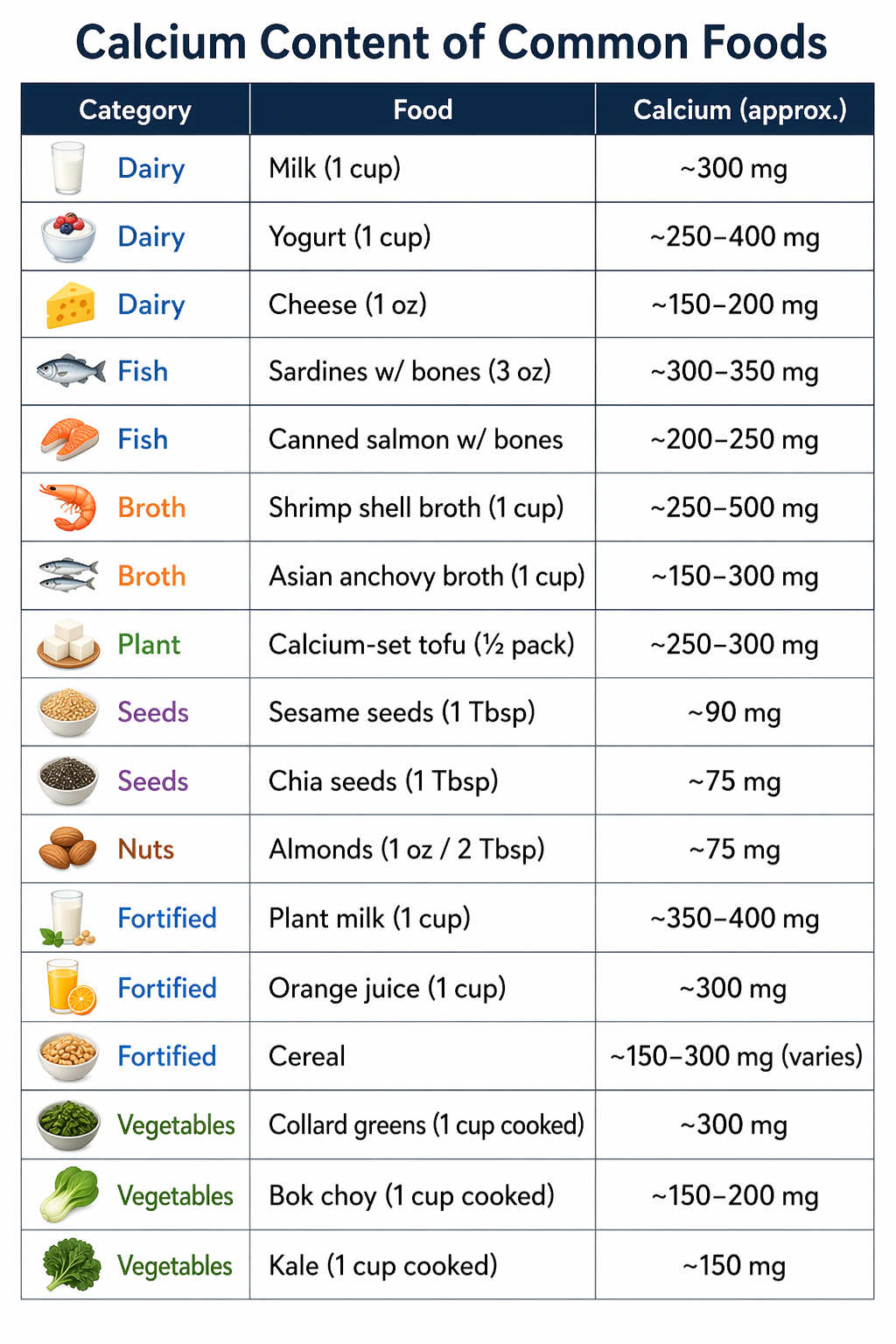
There are plenty more foods with good amounts of calcium.
A balance, diverse meal will help us reach our calcium needs a lot easier.
Ingredients
Makes 5 cups of broth¼ cup canola oil
3 cups shrimp shell
6 cups water
Instructions
1. Heat oil
Heat a pot and add canola oil.
2. Shrimp shells
Add shrimp shells to the heated oil and turn heat down to low-medium. Cook shells for about 5 minutes.
3. Strain oil
Strain oil into a jar and refrigerate up to 3 months. Use this oil for curries, sauces, soups, or any seafood dishes.
4. Water
Add 6 cups of water and turn heat up to high. Bring water to boil for 2 minutes then turn heat down to low and simmer for 25-30 minutes. The longer the richer the broth is.
5. Strain broth
Strain broth through a strainer. Either use the broth right away or store in a food container in the refrigerator for up to 7 days or freezer for 6 months.
Dietitian Notes
Each cup: 30-50cal | 1g carb | 5-8g protein | 15-20g fat
You can make anchovy broth using this method as well or simply use less oil if you want all the flavor to be within the broth and not having to strain out the oil. I’d use 1 Tbsp of oil for 2 cups of dried anchovies. No need to add salt. Season when you are cooking a dish with the broth.
Tips & Variations
Adding some other fragrant ingredients can help elevate its flavor:
Asian chives
garlic
onion
dried shitakes
ginger (just a ¼-inch piece would suffice)
References
Charde SH, Joshi A, Raut J. A Comprehensive Review on Postmenopausal Osteoporosis in Women. Cureus. 2023 Nov 9;15(11):e48582. doi: 10.7759/cureus.48582. PMID: 38090417; PMCID: PMC10711335.
Rani J, Swati S, Meeta M, Singh SH, Tanvir T, Madan A. Postmenopausal Osteoporosis: Menopause Hormone Therapy and Selective Estrogen Receptor Modulators. Indian J Orthop. 2023 Dec 7;57(Suppl 1):105-114. doi: 10.1007/s43465-023-01071-6. PMID: 38107817; PMCID: PMC10721581.
